

Hundreds of years before Tolkien re-popularised fantasy stories, a writer told of dragons, hobgoblins, giants and journeys. Today John Bunyan has largely been forgotten, but for hundreds of years his book, The Pilgrim’s Progress, remained the second most popular written work in the English language – after the Bible.

John Bunyan was born in the little hamlet of Harrowden, Bedfordshire, England. His father was a tinker (a mender of pots and pans). As a boy, John learned the family trade, picking up a little schooling as well. He often read the popular stories of the day in cheap paperbacks.
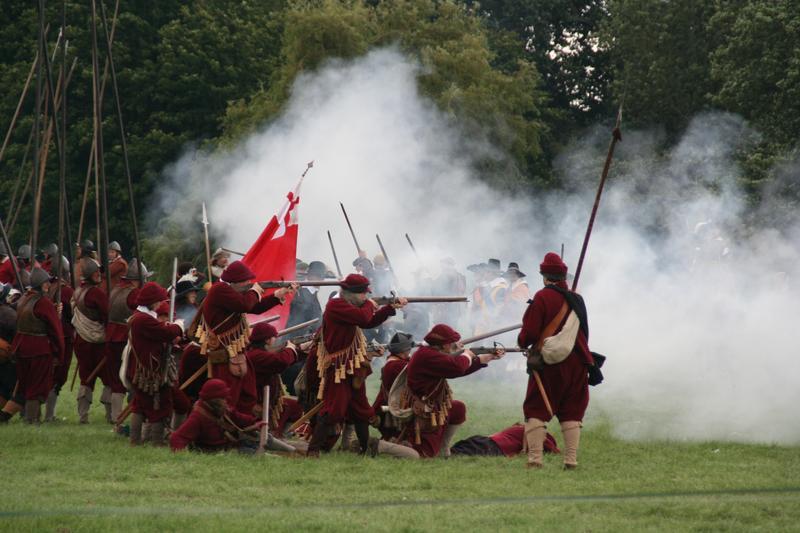
In the summer of 1644 his mother and sister, Margaret, died. Late in the year, John joined the Parliamentary army. At the time the First English Civil War was raging.
Writing years later, John described himself as, “…one of the black sinners of the world… I had few equals… both for cursing, swearing, lying and blaspheming the holy name of God… In those days the thoughts of religion were very grievous to me; I could neither endure it myself, nor that any other should.”
With the war’s end, John returned home to take up the tinker trade. He married not long afterwards. He and his wife would have 4 children together. The eldest, Mary, was born blind in 1650.
Around this time, one question seems to have begun to plague Bunyan, “Where will I go when I die?” One Sunday he became overwhelmed with the conviction that he faced a simple choice, “Wilt thou leave thy sins and go to heaven, or have thy sins and go to hell?”
But wasn’t his case hopeless? And since he was going to hell anyway, “I had as good be damned for many sins as to be damned for few.” In the end, he did start trying to clean up his speech and gradually gave up many of the activities and friends he enjoyed. If he could just keep God’s law rigorously enough, could he somehow earn acceptance and forgiveness?

The change in John didn’t go unnoticed in the local, small community. People congratulated and admired him for so radically turning over a new leaf. John, though, wasn’t convinced it was enough.
One day, while doing his usual rounds, he overheard a group of women talking. It sounded as though they were talking about religion. Feeling he knew a thing or two about the matter, John Bunyan stopped to join in the conversation. What he heard though, left him astonished.
For John, religion was a gloomy chore. After all, it was religion that forced him to give up all the things he most enjoyed. Yet here was a group of people who seemed to be joyful over what they’d learned about God. John wanted to know more and would often stop by when he had the chance.
Gradually he began to understand what he had been missing. We can never make up for our wrongdoings by living the way we should have been all along. That’s not how justice works! Instead, out of great love and mercy, Jesus of Nazareth in his life, death and resurrection has already done everything needed for us to be forgiven and accepted into the family of God. There was nothing left for John to do. He simply needed to trust in Jesus.
For a long time, he struggled to believe that what Jesus had done could be enough to save someone like him. He studied the Bible, wrestling and praying over what he had read as he trekked from village to village, carrying his tinker’s anvil on his back.
The local women John had met went to the newly created Bedford Free Church. John started going too. There he met the pastor, John Gifford. Mr Gifford was a great friend to the younger John. Eventually, Bunyan was able to rest in what Jesus had done for him. In 1653 he joined the church. He became known locally as a Christian preacher – someone who tried to help others understand the Bible’s message.
Sadly in 1658 John Bunyan’s first wife died. He married his second wife, Elizabeth, a year later. They had two children together. However, the political situation in England now changed dramatically, bringing serious consequences to the Bunyan family.
The turmoil and violence of the English civil wars led to the beheading of King Charles I. England, Wales, Scotland and Ireland became a republic called “the Commonwealth of England”. It was a tumultuous period that in England is often remembered for strict laws (at one point Christmas was banned for being too Catholic). But people did enjoy greater religious freedom. Many new “independent”, or “non-conformist” churches sprung up. John Bunyan’s was one such church.
But now, in 1660, Charles II became king and the republic was no more. Independent churches were seen as dangerous by the new government. It was made illegal for someone like John Bunyan – not part of the official state church – to preach. He was arrested and initially sentenced to three months in prison. He refused to promise to stop preaching if released. He spent the next 12 years in the County Gaol, from 1661 to 1672.
Life became extra hard for John and his family. The prison didn’t provide him with food. His blind daughter, Mary, would often have to go to the prison with her father’s meals. Inside the jail, John did his best to support his family by making “long-tagged bootlaces” for them to sell.
But John was a very creative man. Before he had been imprisoned he’d crafted a metal violin and taught himself to play. The story goes that during his time in jail, John carved a flute from a wooden stool leg. Apparently, he would fit the flute back onto the stool if he heard the jailor coming.
He now put the little schooling he’d had as a child to good use. He wrote three books in total from inside the jail, including his autobiography Grace Abounding. He also wrote most of the text for a story, which was to become the first part of Pilgrim’s Progress.

Even after his release in 1672, the government kept changing its mind on independent churches. John spent a least one more brief period in prison for preaching. But it never made him give up. Meanwhile, on 18 February 1678, the first part of Pilgrim’s Progress was published to immediate success. The second half of the story followed in 1685.
John Bunyan spent the rest of his life preaching, writing and serving as the pastor of a local independent church. He would travel on horseback all over Bedfordshire and the nearby counties to preach, earning the affectionate nickname of “Bishop Bunyan”. He died on 31 August 1688 at 59 years old. Sadly because his will was lost, Elizabeth didn’t receive the substantial royalties from her husband’s published books.
Bunyan’s life should be remembered because motivated by his Christian faith, he stood up for religious liberty, freedom of conscience and freedom of speech, paying a high price for doing so. Yet it is the message of his most famous work which he would want us to remember – the message of hope found in Jesus Christ which he dedicated his life to proclaiming.

The full title of Bunyan’s famous story is, “The Pilgrim’s Progress from this world, to that which is to come, delivered under the similitude of a dream wherein is discovered, the manner of his setting out, his dangerous journey and safe arrival at the desired country.” Snappy titles weren’t a thing back in the 1600s it seems!
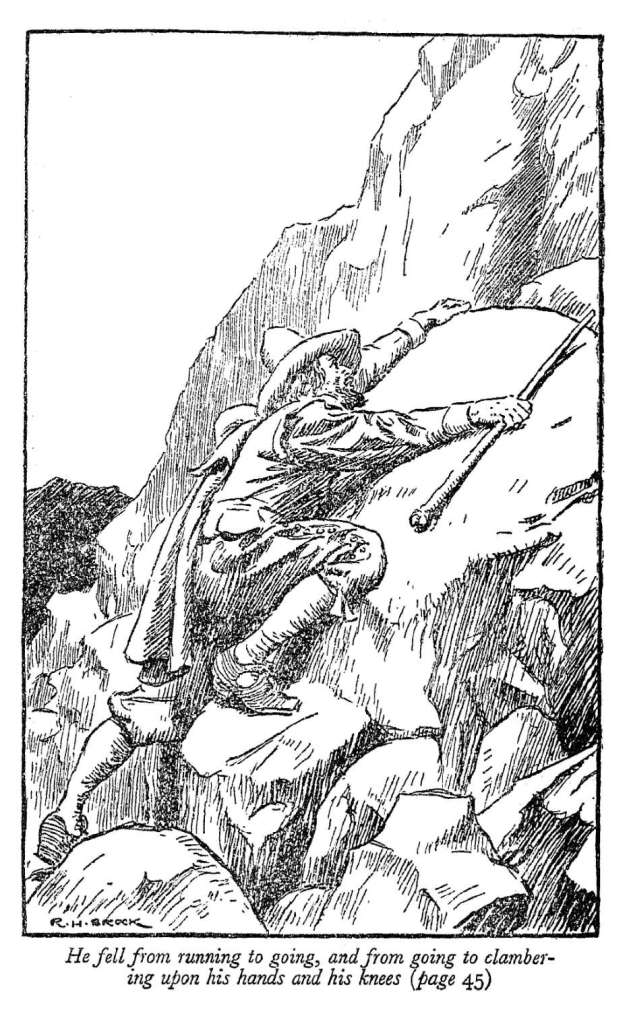
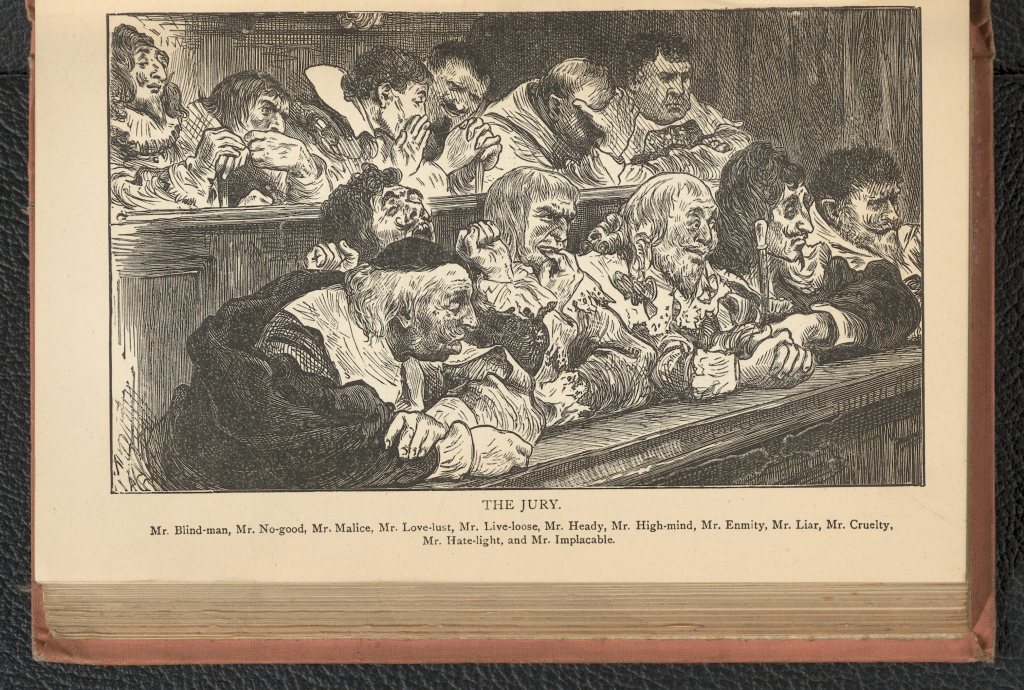
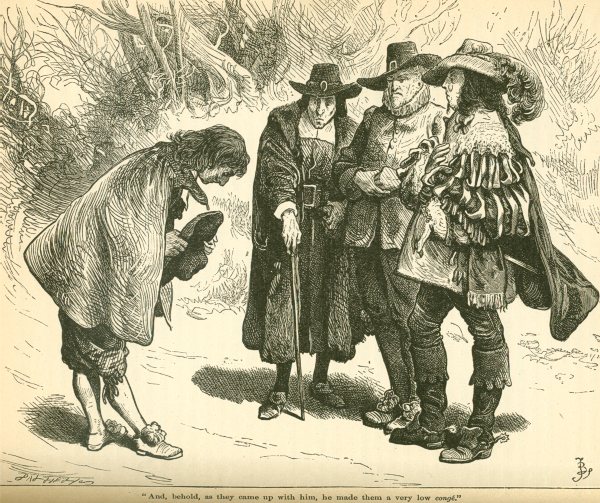
In essence, the story is the life of a Christian told through pictures of travellers on a journey. Bunyan uses his own vivid imagination and the common vernacular of his day to powerful effect. The characters and striking imagery mark Pilgrim’s Progress as a great work of English literature.
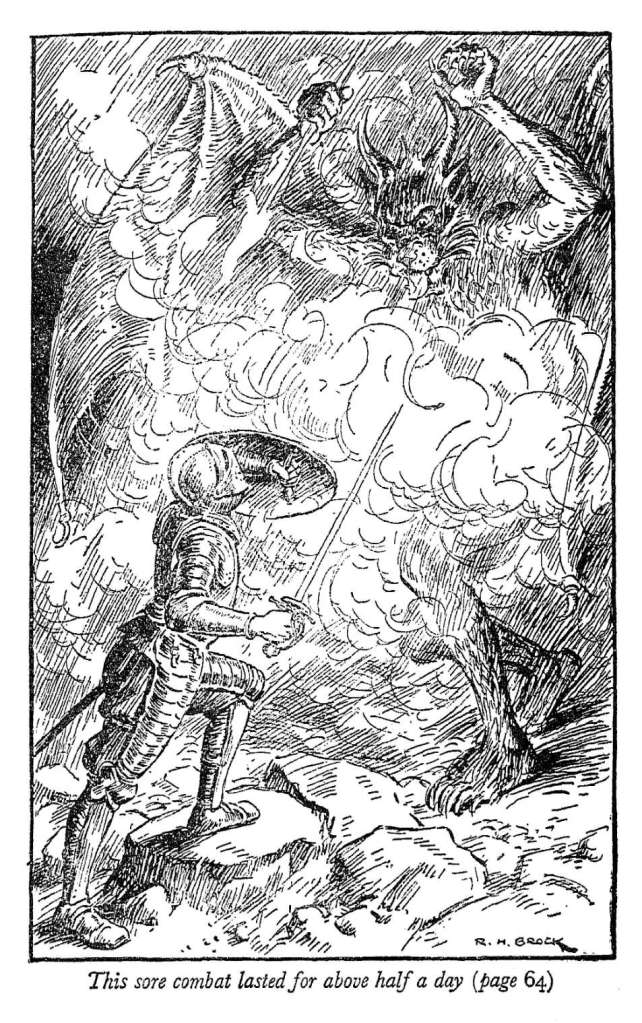
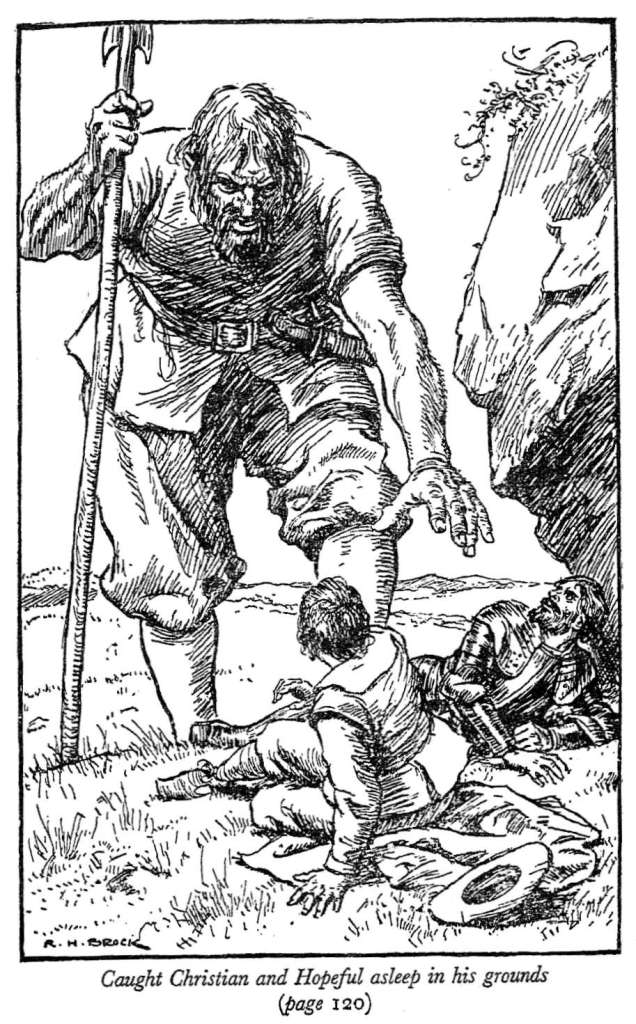
Christian, Hopeful, Mr Great-Heart, Mercy, the dragon Apollyon, Vanity Fair, Athiest, Giant Dispair and the dark dungeons of Doubting Castle – John’s cast of characters and places are unforgettable.
The story has enjoyed astonishing levels of popularity. While it may be less well known in our modern, secular societies, its imagery and story have so deeply influenced the culture and literature of the English-speaking world that we still use its ideas and concepts today – perhaps without realising. You cannot tell the story of British literature and culture without at least a passing reference to John Bunyan’s Pilgrim’s Progress.






“There’s no book in English, apart from the Bible, to equal Bunyan’s masterpiece for the range of its readership, or its influence on writers as diverse as William Thackeray, Charlotte Bronte, Mark Twain, CS Lewis, John Steinbeck and even Enid Blyton.”
Why not read it for yourself? It is free to read online here. It’s also widely available in paperback, both with the original text and in modernised English.
You can find out more about the life of John Bunyan here. His own account of how he came to be a Christian is found in his autobiography, Grace Abounding to the Chief of Sinners. You could also read Fearless Pilgrim – Faith Cook’s modern biography of his life.
Your thoughts are welcome! Please feel free to leave some feedback, questions or disagreements.

 Yours Truthfully